
2026 Talent Marketing Trends Report
Updated: Jan 25
Credibility, culture and compounding influence in an AI-saturated world
In fashion & beauty, credibility creates aspiration - and aspiration compounds influence. - William Shoe, Talent Village

Introduction
I’ve spent the last decade working at the intersection of talent, culture and brand building. Through Talent Village, we’ve partnered with premium and luxury brands since 2017 to design talent-led strategies that don’t just drive visibility, but build long-term credibility and cultural relevance. What follows isn’t a trend report in the traditional sense. It’s a point of view shaped by what I’m seeing on the ground - in premium beauty conversations, in data, and in how audiences are actually behaving online.
As we move into 2026, one thing is clear: influence is no longer about scale alone. It’s about credibility, aspiration and compounding trust in an increasingly saturated and AI-accelerated world.
The context: more content, less trust
2026 is defined by two collisions:
Saturation: there has never been more content, more “talent”, or more brand messaging competing for the same attention.
Credibility pressure: the public is increasingly unsure what to believe - and is actively looking for receipts, expertise and trusted voices.
Edelman’s 2025 Trust Barometer captures the mood shift clearly: 69% of people worry institutional leaders deliberately mislead, and 63% say it’s becoming harder to tell whether information is credible or deceptive.
In this environment, the role of talent changes. The most effective talent are no longer “distribution”. They become sources of truth, cultural translators, and trust infrastructure.
1. Validating the Internet: Talent-led strategy
The biggest evolution I see heading into 2026 is structural: talent are moving upstream.
At Talent Village, this is something we’ve believed in - and built around - since 2017. Talent marketing works best when it’s embedded into the strategy from day one, not bolted on at the end as a distribution tactic. What’s changed is that the market has finally caught up.

In premium beauty especially, trust has become the limiting factor for growth. Ingredient literacy has risen sharply, misinformation travels fast, and consumers actively scrutinise claims before they buy. Vogue Business has repeatedly highlighted how beauty audiences now seek third‑party validation - from experts, artists, insiders and credible talent - before converting.
This shift is now visible at a corporate level. Estée Lauder Companies referenced education‑led social content and expert partnerships in recent earnings commentary as a driver of engagement and performance across its skincare and treatment brands. The implication is clear: credibility is no longer a nice‑to‑have; it’s commercial infrastructure.
In practice, the new talent‑led loop looks like this:
Audiences and talent surface behaviours in the wild - routines, rituals, ingredient stacking, cultural shortcuts, myths.
Those behaviours gain traction through social search, comments, DMs, group chats and editorial echo.
Brands validate what’s true, what’s safe, what’s legally sound and what’s reputationally robust.
Talent then help formalise the narrative, translating science, efficacy and application into culturally fluent education.

The subtle but critical shift is this: campaigns now start with what people already do and believe. Brands earn the right to amplify by adding clarity, authority and restraint. For premium and luxury brands, this matters even more because the brand is the product. You can’t afford to chase trends clumsily. You need controlled momentum - culturally current, but undeniably on‑brand.
Cultural proof point: Fashion Weeks and global tentpoles are now measurable media engines. Wearisma, via WWD, reported that Milan and Paris Fashion Week generated over $350M in media value in March 2024. This is where talent‑led strategy wins - not as an afterthought, but as a designed communications system that turns cultural moments into compounding visibility.
2. The end of “relatable” as a strategy - credibility as the new differentiator
Relatability hasn’t disappeared. It has simply stopped being enough.
What I see very clearly in 2026 is that audiences don’t want to “hang out” with talent in the way they once did. They want signal:
taste
expertise
decision‑making
proof
repeatable methods
This is a rational response to saturation.
When feeds are flooded - and AI‑assisted content accelerates volume even further - people become more selective about where they place their attention. They gravitate toward talent who can teach, verify and translate complexity into action.
As Will.i.am put it recently, talent‑led content is like organic produce, while much AI‑generated content is the cheaper, chemically accelerated alternative. Volume increases - but trust doesn’t.

That same shift shows up in behaviour and performance data. Audiences increasingly favour talent who feel credible, not just relatable - particularly in categories like beauty, where efficacy and trust directly influence conversion.
For brands, the implication is straightforward:
Credibility‑led talent protects brand equity
Credibility‑led talent reduces uncertainty at the point of purchase
Credibility‑led talent travels better across channels - social, editorial, events, search and now AI‑driven discovery
As misinformation rises and trust becomes harder to earn, credible talent become disproportionately valuable.
3. Social search is where niche talent compound influence

In 2026, virality is nice - but discoverability during research is money.
A growing share of the funnel has moved from passive scrolling to active search on TikTok, Instagram and YouTube:
“best X for Y”
comparisons
reviews
tutorials
One headline stat underlines the shift: 64% of Gen Z and 49% of Millennials now use TikTok as a search engine.
For brands, this pushes talent strategy closer to SEO logic:
build a portfolio of talent, not a single hero
ensure repeated coverage of the same category questions
prioritise talent who can explain, demonstrate and compare clearly
In fashion and premium beauty specifically, classic formats still drive action. Multi-year campaign analysis shows that GRWM formats remain among the strongest drivers of click-through rate in beauty and fashion. The play is not to reinvent the format - it is to elevate it.
Luxury wins when it uses familiar structures, executed with taste, craft and cultural literacy.
4. AI content will make real talent more valuable, not less

AI is not just changing production. It is changing belief.
As synthetic content becomes easier to generate, audiences increasingly seek out platforms, communities and voices that feel verifiably human. We are already seeing early signals of “AI-segregated” environments: emerging platform concepts aim to flag or limit generative AI content, positioning themselves as safe spaces for human-made media.
Beyond platforms, the trust pressure is cultural:
when people can’t tell what’s real, credibility rises in value
when content becomes cheap, taste becomes expensive
when anyone can create, the differentiator becomes authority, point of view and real access
This is why premium and luxury brands should double down on talent who are:
genuinely close to the category (beauty experts, makeup artists, insiders, credible editors)
trusted by a defined community
able to articulate why something is good, not just that it exists
5. The real growth lever: cultural moments and IRL access
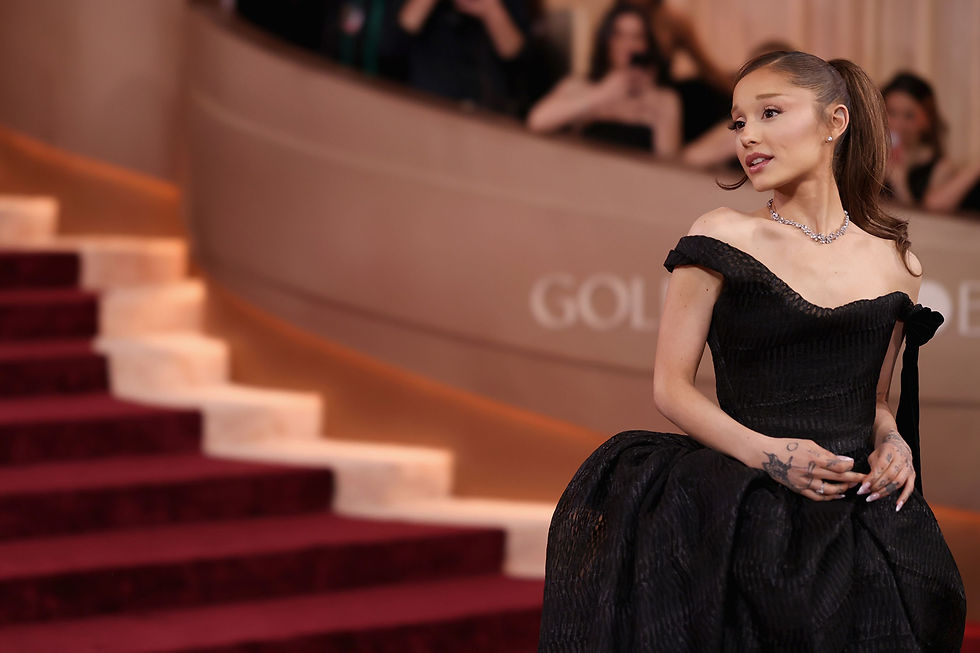
The most defensible advantage in 2026 is access.
AI can generate aesthetics. It cannot generate:
front-row proximity
backstage perspective
red carpet energy
cultural legitimacy
Fashion Weeks, premieres, sporting events and red carpets are where premium brands win disproportionate cultural share - because this is where the brand becomes a moment, not an ad. We can now quantify that impact. Launchmetrics reporting cites $273.4M in Media Impact Value for Milan Fashion Week over a 15-day tracking period, with Instagram driving the majority of value.
The strategic shift for brands is to treat tentpoles as campaign engines, not one-off posts:
pre-event storytelling (prep, fittings, routines)
the moment itself (front row, backstage, glam)
post-event monetisation (education, breakdowns, editorial-style recaps)
Talent are partners because they are the connective tissue across all three phases.
6. The overlooked channel shift: private communities and long-form

As feeds become noisier, audiences are building depth elsewhere.
Two signals matter:
Substack surpassed 50M active users in 2025
Discord now exceeds 200M monthly active users, with 74% aged 16–34
These spaces are difficult for brands to enter directly without diluting trust.
The most effective route is partnership-led:
talent who already hold community trust
talent who can introduce brands naturally into conversation
These environments are also powerful research tools. Premium brands should use talent not only for distribution, but to understand language, objections, aspiration cues and emerging behaviours.
The strategic implication for 2026
The takeaway is simple.
In an AI-saturated, trust-fractured economy, real talent with real credibility become more valuable - and more defensible - than ever, particularly in premium beauty.
Winning brands will:
build strategy with talent from the start
prioritise credibility and aspiration over pure reach
invest in social search and compounding discoverability
use AI to enhance craft while protecting human trust
activate around cultural tentpoles where access and legitimacy cannot be fabricated
This is the foundation of Talent Village’s playbook for 2026.
If you’d like to discuss how we can help your brand build credibility, aspiration and long-term influence through talent, contact us at enquiries@talentvillage.com.


Comments